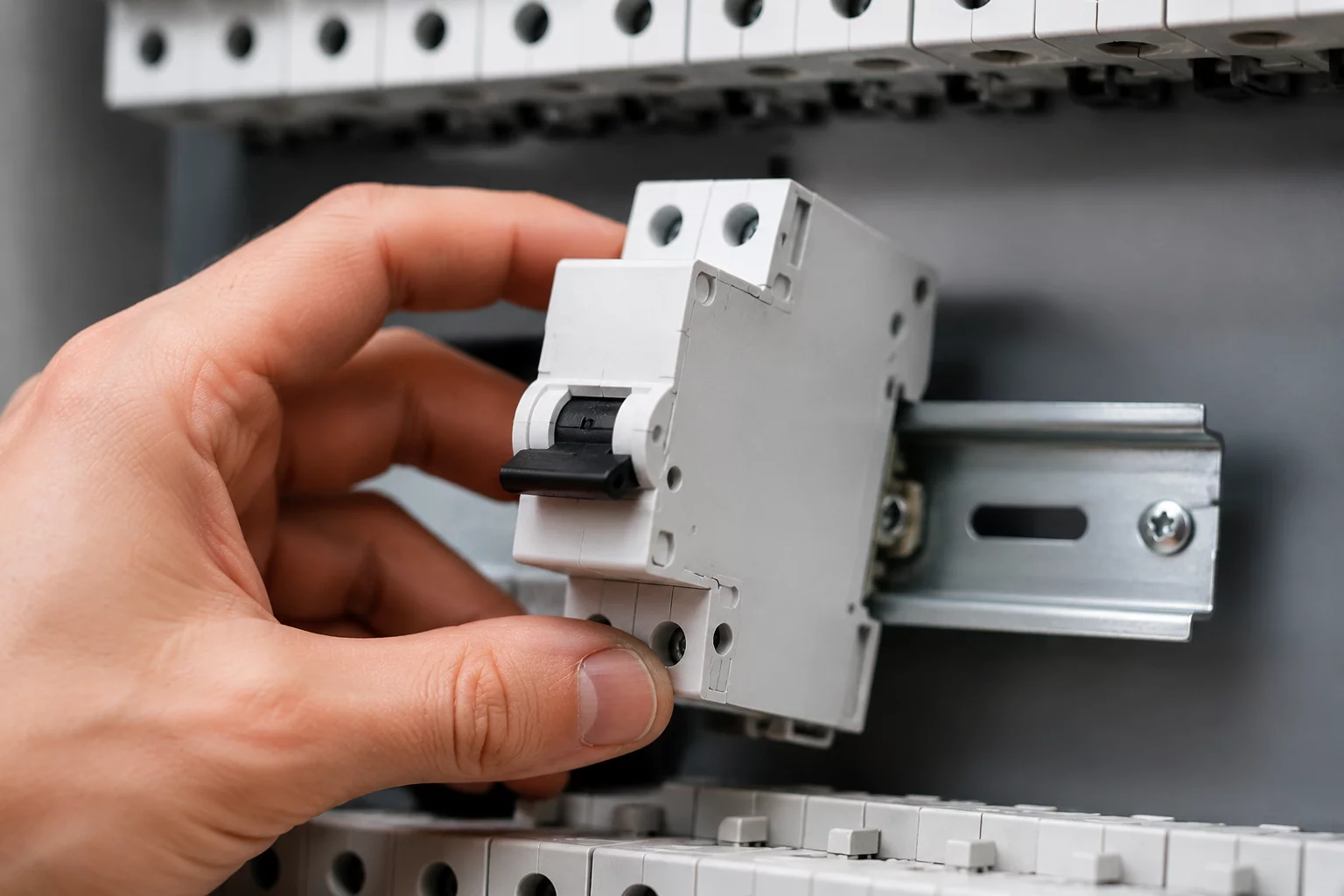
A circuit breaker functions as the fundamental safeguard for domestic wiring, instantly interrupting electrical current when overcurrent or short circuits emerge. Replacing a worn, buzzing, or frequently tripping breaker restores protection to connected devices, preserves conductor insulation, and prevents hazardous heat accumulation inside the distribution board.
Key Safety Note
Repeated tripping usually signals genuine thermal overload or ground fault activity along the circuit. Continually resetting a breaker without professional inspection risks melting terminal blocks, eroding busbar contacts, and accelerating conductor insulation degradation.
Indicators That a Breaker Requires Replacement
Modern electrical loads from kitchen appliances, heat pumps, and multimedia setups place ongoing thermal demands on distribution components. Over years of service, internal bi-metallic strips lose calibration and magnetic trip coils become sluggish. Recognizing warning signs early prevents unexpected blackouts and structural hazards.
- Breakers showing visible scorching, melted exterior casing, or burning plastic odors near the panel frame.
- Switches that refuse to reset to the ON position despite all downstream appliances and socket loads being unplugged.
- Breakers that feel noticeably hot to the touch or produce persistent buzzing sounds during standard power consumption.
Upgrading to RCBO and AFDD Technology
Standard miniature circuit breakers (MCBs) protect solely against overcurrent and short circuits, leaving homes vulnerable to residual leakage and dangerous electrical arcing. Modern consumer units increasingly incorporate RCBO units, which merge overcurrent protection with ground fault sensing in a single compact DIN module. Integrating arc fault detection devices (AFDDs) further guards against loose terminal connections and damaged cables concealed behind drywall.
Prior to replacing any switch, verify busbar compatibility, test insulation resistance on copper branch lines, and confirm terminal torque ratings against manufacturer engineering specifications.
Replacing individual faulty units maintains balance across residential subcircuits without requiring a complete distribution board tear-down. Scheduled diagnostics and timely component swaps protect your valuable appliances while ensuring your home infrastructure complies with contemporary electrical safety norms.
Community Discussions
No comments yet. Be the first to leave a comment below.
Leave a Comment
Share your insights, questions, or renovation feedback below.