
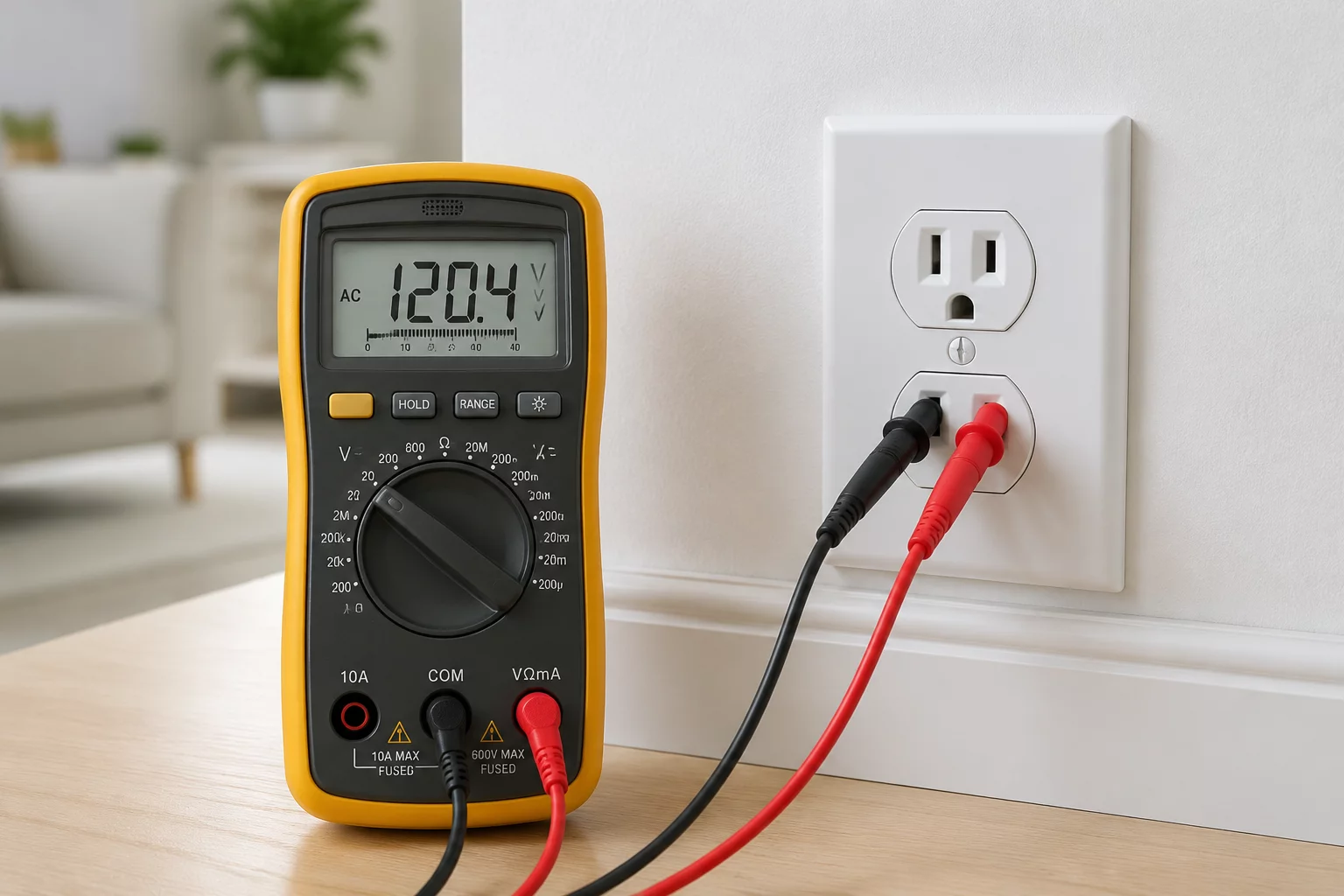
Electrical fault finding isolates the root causes behind tripping breakers, flickering lights, mysterious power drops, and thermal hotspots within residential electrical systems. Using systematic circuit verification and calibrated testing meters, diagnostics identify concealed wire degradation and component stress before safety hazards arise.
Key Safety Note
Never repeatedly reset a circuit breaker that trips instantly upon activation. Immediate tripping signals a direct short circuit or severe earth fault that requires diagnostic instruments to inspect safely.
Common Symptoms Requiring Diagnostic Testing
Hidden electrical faults often develop gradually behind wall linings and inside junction boxes. Early detection prevents damage to expensive home appliances and eliminates dangerous arcing conditions across branch lines.
- Nuisance RCD or breaker tripping triggered without heavy appliance loads attached.
- Unexplained voltage drops, buzzing switch plates, or warm socket faces.
- Intermittent loss of power across specific socket rings or lighting zones.
Systematic Testing and Troubleshooting Procedure
Diagnostics follow an orderly protocol involving insulation resistance testing, loop impedance measurements, and continuity checks across live, neutral, and earth conductors. This structured method pinpoints the exact point of failure without unnecessary demolition of finished surfaces.
Diagnostic measurements evaluate conductor integrity across micro-ohm resistance scales and test insulation barrier resistance up to 500V DC to detect microscopic breakdown in wire insulation jackets.
Accurate electrical fault finding restores complete reliability to your home electrical distribution. Once the underlying faults are mapped and documented, targeted repairs or circuit component replacements can be executed with precision.
Community Discussions
No comments yet. Be the first to leave a comment.
Leave a Comment
Share your insights, questions, or renovation feedback below.