
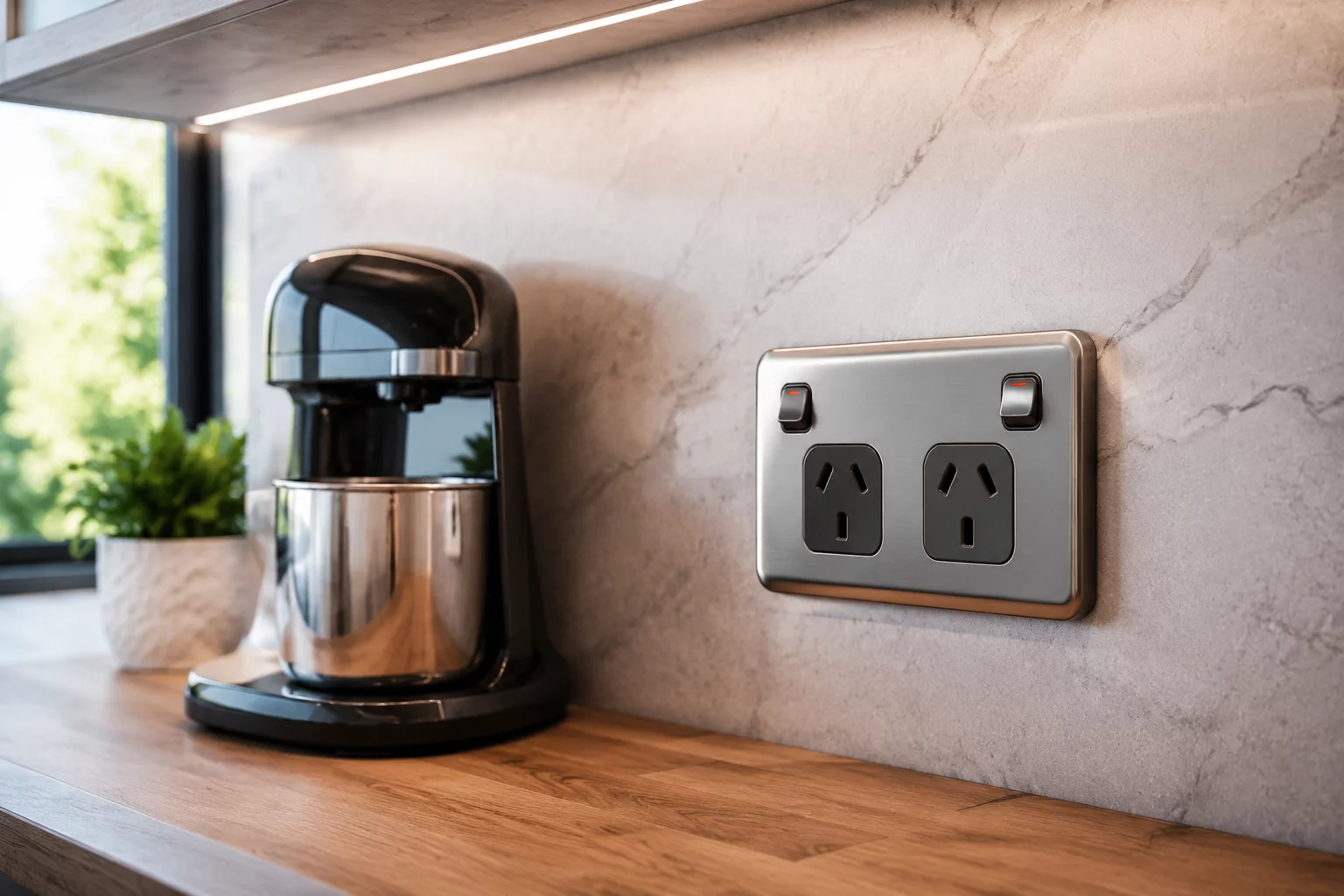
Modern kitchens concentrate the highest electrical demand in a residential home, requiring dedicated branch circuits to prevent breaker trips and overheating. Heavy cooking appliances draw substantial continuous current that standard multi-outlet lines cannot support.
Key Safety Note
High-wattage kitchen appliances such as induction hobs, pyrolytic ovens, and built-in steam units must never share neutral or line conductors with general countertop small appliance sockets.
Sizing Dedicated Circuits for Heavy Appliances
Induction ranges and double ovens often demand individual 32A to 50A circuits with copper conductors rated at 6.0 mm² or 10.0 mm². Running these loads through isolated pathways directly from the consumer unit protects sensitive electronic control boards against voltage drops while eliminating branch line overloads during simultaneous cooking cycles.
- Individual circuit isolation for built-in ovens, cooktops, and high-capacity dishwashers.
- Proper terminal torque verification and heat-resistant containment behind cabinetry.
- Direct residual current device (RCD) and AFDD protection on all kitchen supply feeds.
Eliminating Common Kitchen Wiring Vulnerabilities
Shared neutral cables and undersized junction boxes hidden behind counters create persistent thermal stress points. During appliance upgrades, our technicians assess consumer unit busbar loading, route armored or conduit-protected cabling, and install local isolator switches for immediate maintenance access.
Inspect connection terminals for heat discoloration, check continuous amperage ratings against appliance nameplates, and ensure local isolation switches remain accessible without requiring appliance removal.
Upgrading your kitchen with dedicated high-capacity circuits ensures your modern cooking appliances operate efficiently while keeping the entire residential electrical system fully protected against thermal stress.
Community Discussions
No comments yet. Be the first to leave a comment.
Leave a Comment
Share your insights, questions, or renovation feedback below.