
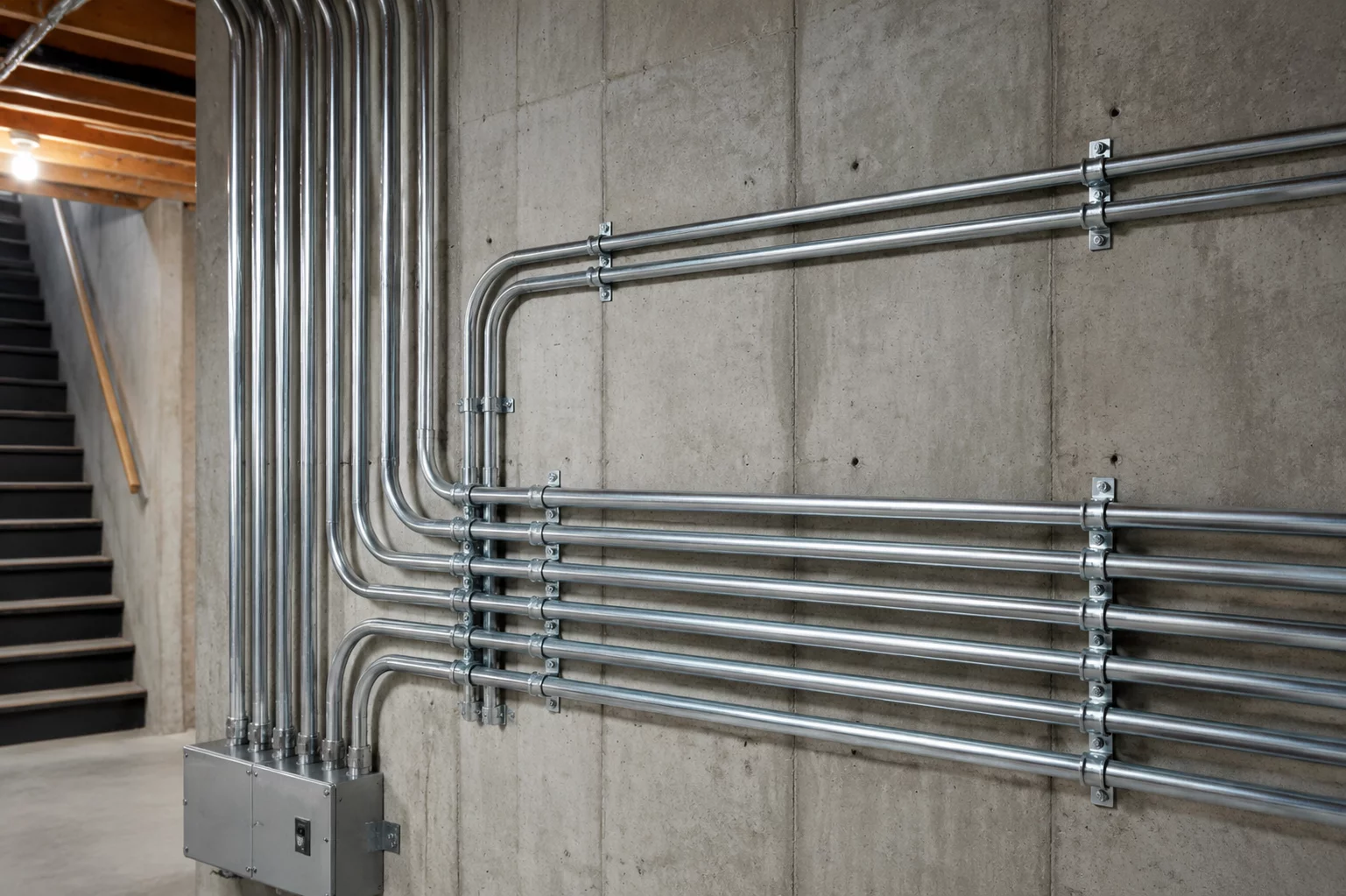
Expanding a suburban residential property creates substantial new electrical demands that standard legacy consumer units cannot handle alone. This project involved routing dedicated branch lines, mounting rigid protective conduit pathways, and installing a modern sub-panel distribution hub to power a two-story home extension reliably without straining the main electrical supply.
Key Safety Note
Sub-panel feeder cables require precise overcurrent sizing at the source panel, along with completely isolated neutral and earth buses inside the secondary unit to eliminate circulating neutral currents and hazardous touch voltages.
Structural Load Assessment and Sub-Panel Planning
Prior to laying new electrical wiring, an in-depth audit of the home existing service entrance revealed that peak household consumption was already approaching feeder limits. The introduction of multiple high-demand HVAC split units, heated bathroom flooring, and dedicated entertainment circuits in the new addition required calculated load shedding and systematic circuit distribution across phases.
- Precision routing of metallic EMT conduit through basement and crawlspace utility areas for mechanical protection.
- Installation of heavy-duty copper sub-feeders protected by dual-pole breakers with dedicated thermal-magnetic tripping curves.
- Integration of advanced AFDD and residual current protection modules across every newly added bedroom and living room branch line.
Conduit Routing and Resistance Testing
Surface-mounted steel conduits were anchored securely to concrete foundation walls, keeping runs organized and completely isolated from plumbing and ductwork. Once conductors were pulled into position, technicians conducted full insulation resistance measurements, earth fault loop impedance checks, and prospective short-circuit tests to verify compliance with strict residential standards.
Inspect busbar connection torques with a calibrated torque screwdriver, confirm sub-panel earth rod grounding resistance falls below standard threshold limits, and run RCD trip timing checks at 1x and 5x rated current.
The upgraded system now delivers balanced, protected power to the new extension while safeguarding the main consumer unit from overload risks. Reserve capacity in the new distribution unit accommodates future electric vehicle charging additions without requiring additional structural alterations.
Community Discussions
No comments yet. Be the first to leave a comment.
Leave a Comment
Share your insights, questions, or renovation feedback below.