
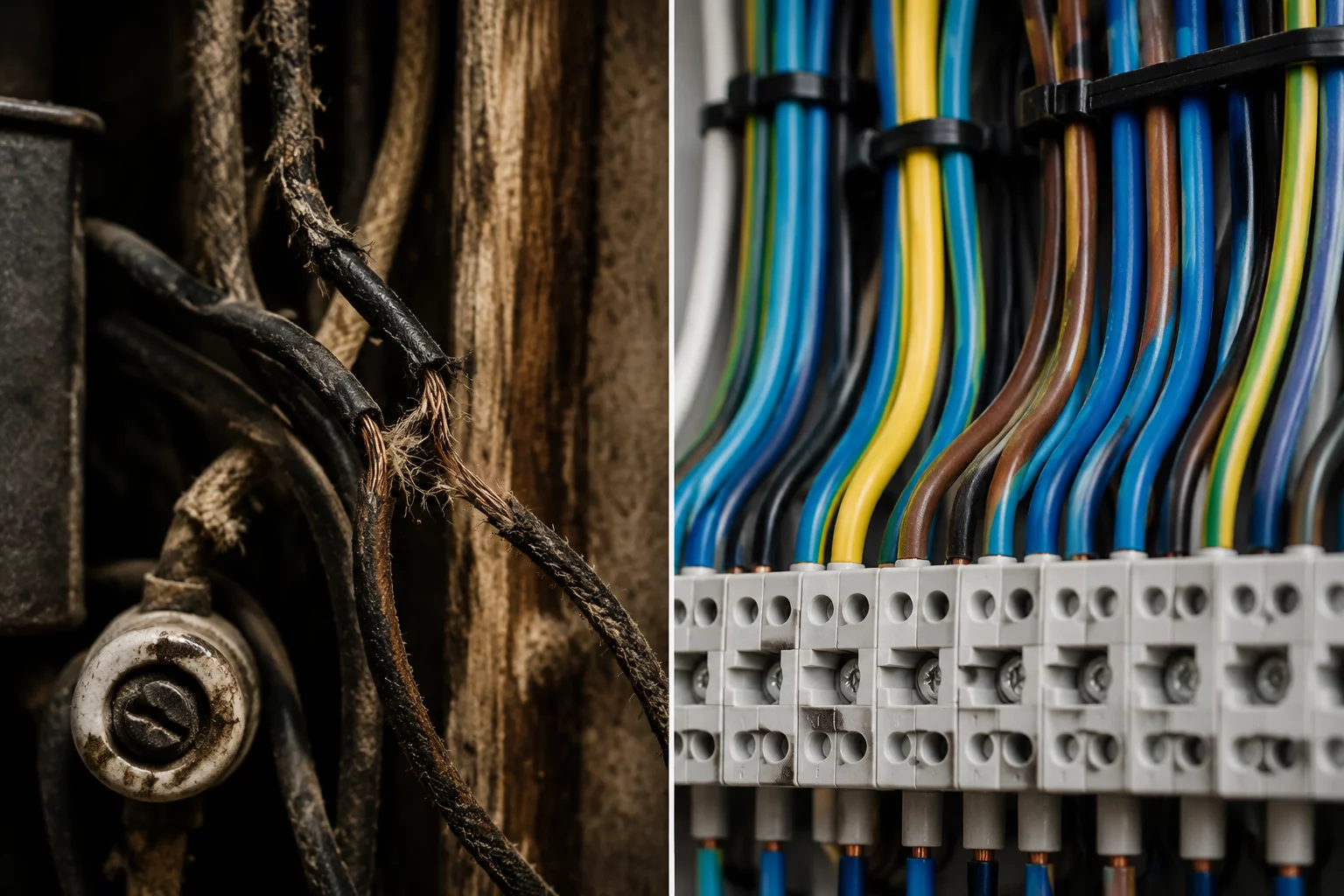
Modern electrical demand places immense stress on historical properties built decades before high-power appliances and digital electronics existed. In this residential project, our engineering team carried out a complete electrical rewiring of a two-story vintage residence, replacing brittle cloth-sheathed lines and ungrounded circuits with a modern multi-zone consumer unit and flame-retardant copper conductors.
Key Safety Note
Older properties frequently conceal severe heat damage behind historic wall cavities. De-energizing the main supply and establishing physical path mapping prevents structural disturbance while eliminating hidden insulation breakdown risks.
Initial Assessment and Non-Invasive Routing
Before pulling new conductors, technicians performed insulation resistance checks across every existing branch run. The original infrastructure featured outdated fuse carriers, brittle rubber coatings, and insufficient earth bonding. To preserve historical plaster moldings and hardwood floors, we planned custom cable routes utilizing crawl spaces, ceiling joist voids, and discreet vertical service channels.
- Conducted comprehensive thermal imaging and circuit isolation across 18 living zones.
- Removed degraded cloth cables and disconnected redundant junction points throughout the attic.
- Installed low-smoke zero-halogen copper conductors in fire-rated protective conduits.
Distribution Panel Upgrade and Circuit Isolation
The old fuse box was replaced with an all-metal dual-row consumer unit fitted with individual residual current breakers with overcurrent protection (RCBO) and integrated arc fault detection devices (AFDD). Dedicated lines were routed directly for major induction loads in the kitchen, high-demand laundry equipment, and specialized surge-protected power strips for home office gear.
Earth fault loop impedance (Zs) and prospective short-circuit current (PSCC) measurements must always be logged at every outlet to confirm fast automatic disconnection times in accordance with standard engineering guidelines.
Upon completing final terminations, all circuits underwent end-to-end continuity testing and polarity verification. The updated home now operates with balanced electrical loads, surge protection against grid spikes, and an infrastructure prepared for modern high-draw appliances without compromising historical aesthetics.
Community Discussions
Leave a Comment
Share your insights, questions, or renovation feedback below.